Advanced Algorithms Reshape How Bettors Build Multi-Leg Wagers on Premier League Goal Markets and Cheltenham Festival Performances
Jonas Carter · Aug 17, 2026

Advanced Algorithms Reshape How Bettors Build Multi-Leg Wagers on Premier League Goal Markets and Cheltenham Festival Performances
Statistical modeling has entered a phase where machine learning systems process vast datasets from Premier League matches and Cheltenham Festival races to guide accumulator selections. These tools combine historical goal tallies, player performance metrics, track conditions, and weather variables into probability estimates that influence how multi-leg bets get structured. Observers note that bettors now access platforms which output adjusted odds ranges for specific goal thresholds in top-flight fixtures while simultaneously factoring in hurdle and chase outcomes from the March meeting at Prestbury Park.
Core Components of Predictive Systems
Researchers at institutions tracking sports analytics have documented how regression models and neural networks evaluate thousands of variables per event. Premier League goal markets draw from shot conversion rates, defensive formations, and referee tendencies, whereas Cheltenham Festival predictions incorporate horse speed figures, trainer strike rates, and going descriptions. One study revealed that integrated datasets allow systems to flag correlations between early-season form and late-March results even when the events occur months apart. Bettors who apply these outputs often adjust stake distributions across goalscorer props and each-way festival bets to align with calculated probabilities rather than intuition alone.
Data Inputs and Processing Flows
Systems ingest official match reports from leagues alongside veterinary and performance records from the British Horseracing Authority. Real-time updates during August 2026 pre-season friendlies feed into baseline models that later refine projections for the 2026-27 campaign. Analysts combine these streams with external factors such as travel schedules and squad rotation patterns. The resulting outputs present bettors with ranked parlay combinations that highlight combinations where expected value exceeds market pricing. What's interesting is how models isolate low-probability but high-payout legs, such as specific goal timings paired with longshot festival winners, and surface them for manual review.
Practical Applications in Accumulator Construction
Bettors receive interface suggestions that group Premier League goal lines with Cheltenham Festival outcomes based on covariance calculations. For instance, models might link high-scoring Manchester City fixtures to certain novice hurdle results where speed ratings align with projected margins. Those who've studied these platforms report that users can toggle between conservative and aggressive risk profiles, which alters the number of legs and the weighting of each selection. Data from industry reports shows increased usage of such tools during the 2025-26 season, particularly among mobile users who adjust parlays minutes before kickoff or race start. And because the algorithms update continuously, late team news or non-runners trigger recalculations that modify recommended structures without requiring manual intervention.
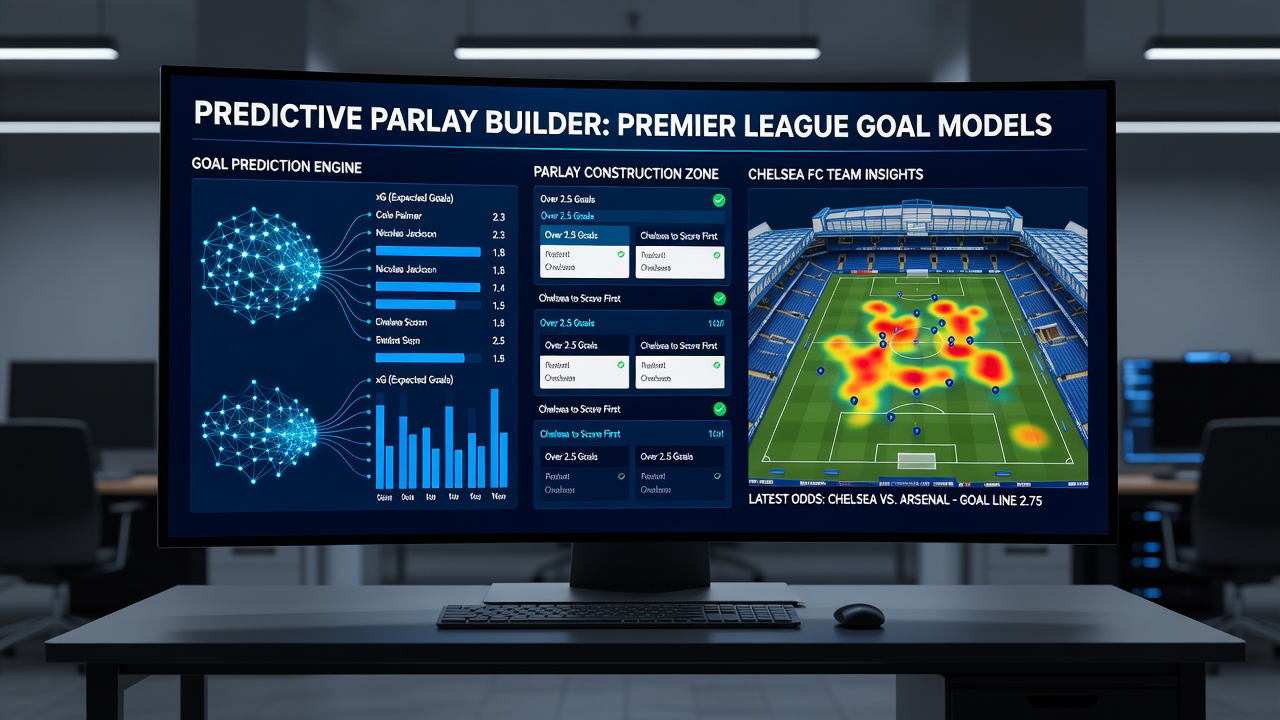
Academic work published by the University of Nevada, Reno gaming research group examined similar algorithmic approaches across multiple sports and racing codes. Findings indicated that users applying model-assisted selection achieved more consistent returns over large sample sizes compared with unaided betting patterns. The same research noted that transparency features, such as confidence intervals displayed alongside each leg, help bettors understand where uncertainty remains highest.
Integration with Betting Platforms
Operators have begun embedding these predictive engines directly into accumulator builders. Users select initial legs from Premier League goal markets and receive automated prompts for compatible Cheltenham Festival additions based on cross-event probability matrices. This setup reduces manual searching while maintaining user control over final choices. Figures from the American Gaming Association illustrate broader adoption trends of analytics tools across betting verticals, although specific UK application rates vary by operator. Platforms also log user interactions to refine future suggestions, creating feedback loops that improve model accuracy over successive seasons.
Challenges and Limitations
Even sophisticated systems encounter constraints when unexpected variables appear, such as sudden managerial changes or veterinary withdrawals. Models trained on historical data can underperform during periods of structural shift in either sport. Experts recommend cross-checking outputs against current team news and track reports rather than relying solely on algorithmic guidance. Observers note that regulatory frameworks in various jurisdictions require clear disclosure when automated tools influence odds presentation, ensuring bettors retain access to raw data sources alongside processed recommendations.
Conclusion
Predictive modeling continues to influence parlay construction by supplying data-backed frameworks that connect Premier League goal markets with Cheltenham Festival outcomes. The technology processes diverse inputs into actionable probability estimates while leaving final decisions with individual bettors. As datasets expand and algorithms refine, the gap between raw statistical signals and market offerings narrows further, shaping how multi-leg wagers are assembled across these two prominent events.