Payment Gateways Enabling Live Accumulator Builds in Football and Equine Racing on Handheld Devices
Jonas Carter · Aug 15, 2026
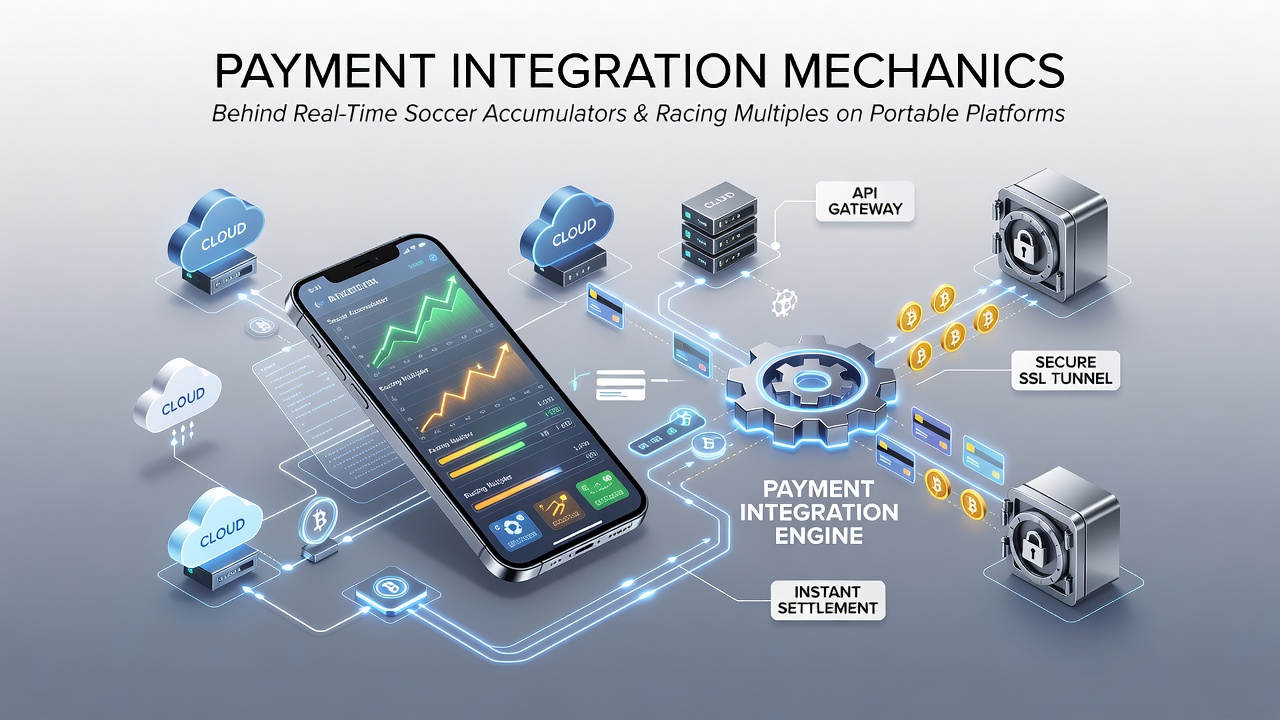
Payment Gateways Enabling Live Accumulator Builds in Football and Equine Racing on Handheld Devices
Payment gateways form the core infrastructure that lets users fund and settle soccer accumulators plus racing multiples in real time through mobile applications, and these systems rely on layered API connections between betting operators, financial institutions, and device operating systems. Developers integrate secure tokenization protocols so that each wager triggers an encrypted authorization request that processes within milliseconds, allowing bettors to add legs to an accumulator while a match unfolds without leaving the app interface. Data from industry reports indicates that transaction success rates for these multi-leg bets exceed 98 percent on major platforms when optimized for 4G and 5G networks, and this reliability stems from redundant server routing that reroutes failed attempts through secondary processors in under two seconds.
Core Components of Mobile Payment Integration
At the foundation sit payment service providers that connect directly to bank APIs and digital wallet frameworks, and these providers handle the conversion of user balances into bet stakes while enforcing responsible gambling limits set by the operator. Soccer accumulators require simultaneous validation across multiple match outcomes, so the gateway must confirm sufficient funds before each added selection updates the potential payout figure, whereas racing multiples such as patents or forecasts demand additional calculations for each-way options that adjust the total stake in real time. Observers note that the architecture typically includes a middleware layer that translates betting slip data into standardized ISO 8583 messages used by card networks, and this translation ensures compatibility across regions where users switch between credit cards, e-wallets, and instant bank transfers.
Real-Time Authorization During Live Events
When a user builds an accumulator on a portable platform during a Premier League fixture or Cheltenham race, the system initiates a pre-authorization hold that reserves the stake amount without immediate deduction, and this hold converts to a completed transaction only after the final leg settles. Researchers at the University of Nevada Las Vegas documented how latency below 300 milliseconds becomes critical for in-play multiples because odds fluctuate with every goal or jump, and delays can cause rejected bets when selections no longer match the displayed price. Payment processors therefore maintain dedicated low-latency connections to betting engines so that a single API call bundles both the wager placement and the funding confirmation, reducing the number of round trips between the device and backend servers.
Security Protocols and Compliance Layers
Encryption standards such as TLS 1.3 combined with device-specific biometric checks protect each transaction, and regulators in multiple jurisdictions require these measures to prevent fraud during high-volume periods around major soccer tournaments or racing festivals. The second image illustrates how a typical racing multiple interface displays the payment breakdown alongside live odds updates. Multi-factor authentication triggers for stakes above certain thresholds, yet the flow remains seamless because biometric data processes locally on the handset before the gateway receives only a confirmation token. Studies from the American Gaming Association show that platforms employing behavioral analytics to flag unusual deposit patterns achieve a 40 percent reduction in chargeback rates compared with basic verification alone, and these analytics run parallel to the payment flow without adding perceptible delay. 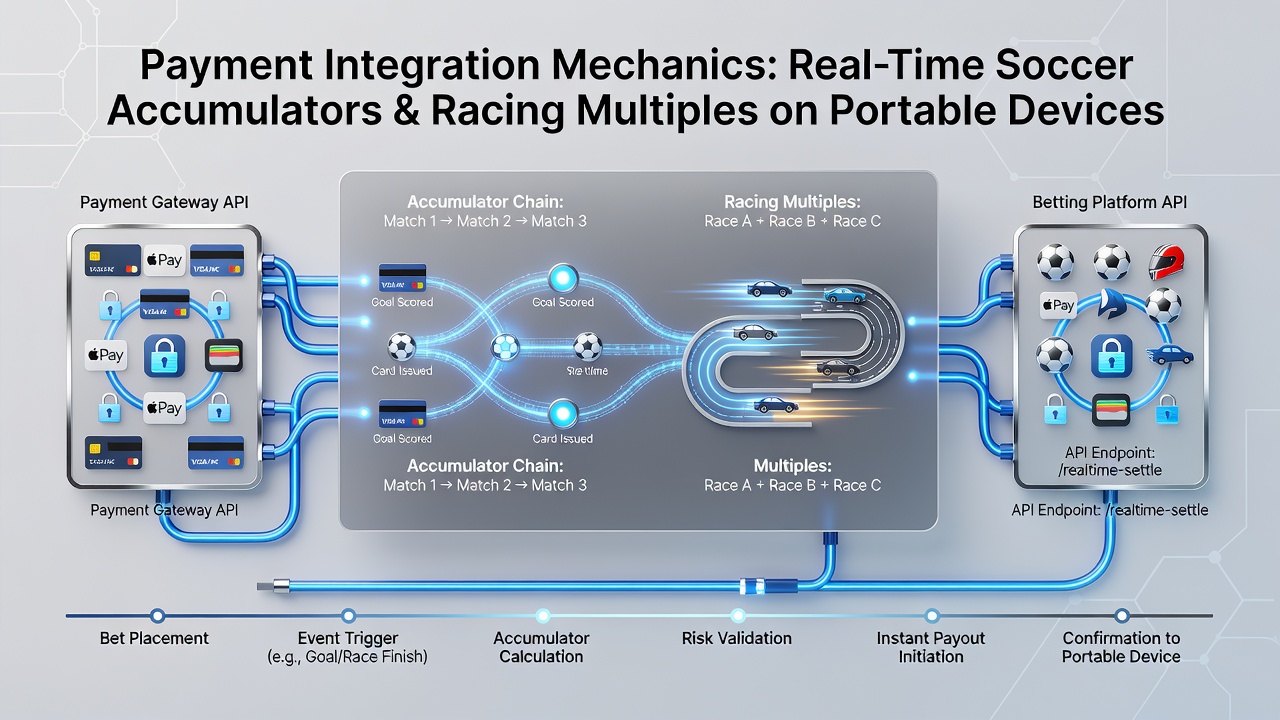
Regional Variations in Payment Rails
North American operators often route transactions through state-licensed processors that interface with local banking networks, whereas European platforms leverage SEPA instant credit transfers that settle in under ten seconds for racing multiples. Australian providers have adopted the New Payments Platform to support same-second funding of soccer accumulators, and this approach reduces failed deposits that previously occurred when users attempted to add legs close to event start times. Each region maintains separate compliance reporting that logs every authorization attempt, creating audit trails that operators share with oversight bodies to demonstrate adherence to anti-money laundering rules.
Future Developments in Portable Transaction Speed
Emerging standards such as open banking APIs allow direct account-to-account transfers that bypass card networks entirely, and early adopters report that these rails cut processing fees by up to 30 percent for high-frequency multiple bettors. As of August 2026 several major platforms have begun testing quantum-resistant encryption modules within their mobile gateways to future-proof accumulator and multiple transactions against evolving computational threats. Integration testing now incorporates simulated network congestion scenarios so that payment success remains stable even when thousands of users place live bets simultaneously during international soccer windows or major racing meetings.
Conclusion
Payment integration mechanics continue to evolve in step with advances in mobile connectivity and regulatory frameworks, delivering the speed and security required for real-time soccer accumulators and racing multiples on portable platforms. The combination of tokenized authorizations, low-latency middleware, and region-specific rails ensures that users can adjust stakes and selections without interruption while operators maintain compliance and operational efficiency across global markets.