Seasonal Shifts Prompt New Accumulator Tactics in Football Competitions and Horse Racing Meetings
Jonas Carter · Aug 13, 2026

Seasonal Shifts Prompt New Accumulator Tactics in Football Competitions and Horse Racing Meetings
Weather patterns have long influenced outcomes in football leagues and equestrian events, yet recent seasonal swings have pushed bettors toward refined accumulator approaches that account for variable conditions across regions. Data from meteorological records show increased volatility in precipitation and temperature during transitional months, which alters pitch quality in soccer and track firmness in racing.
Football Leagues Respond to Changing Conditions
League schedules that stretch from late summer into autumn expose teams to rapid shifts in rainfall and wind, and these changes affect passing accuracy along with goal tallies. Studies compiled by the European Centre for Medium-Range Weather Forecasts indicate that matches played after prolonged dry spells followed by sudden downpours see a measurable drop in expected goals, prompting accumulator builders to favor selections with lower over-lines or defensive-minded sides. Teams accustomed to fast surfaces must adjust formations when grounds soften, and observers note that clubs with strong set-piece records often gain an edge under such circumstances.
August 2026 brought unusually warm spells across parts of northern Europe that contrasted with cooler Atlantic inflows, creating patchy conditions for early-season fixtures. Accumulator strategies adapted by incorporating fixtures from leagues where grounds remained firm, while avoiding clusters of matches in areas hit by flash storms. Bettors cross-reference historical performance data with current forecasts to decide whether to include or exclude teams known for high-tempo styles that struggle on slick surfaces.
Equestrian Circuits Adapt Track Strategies
Horse racing circuits face parallel pressures as ground conditions swing between firm and heavy within short periods, and these variations directly influence race times along with each-way prospects in multi-leg bets. Records maintained by the Australian Bureau of Meteorology highlight how spring transitions in southern hemisphere venues produce firmer tracks early in the day that soften by afternoon, forcing punters to reassess selections for accumulators that span morning and evening races. Trainers report that certain horses handle changing going better than others, and data aggregators now supply updated going descriptions hours before post time to support more precise multi-bet construction.
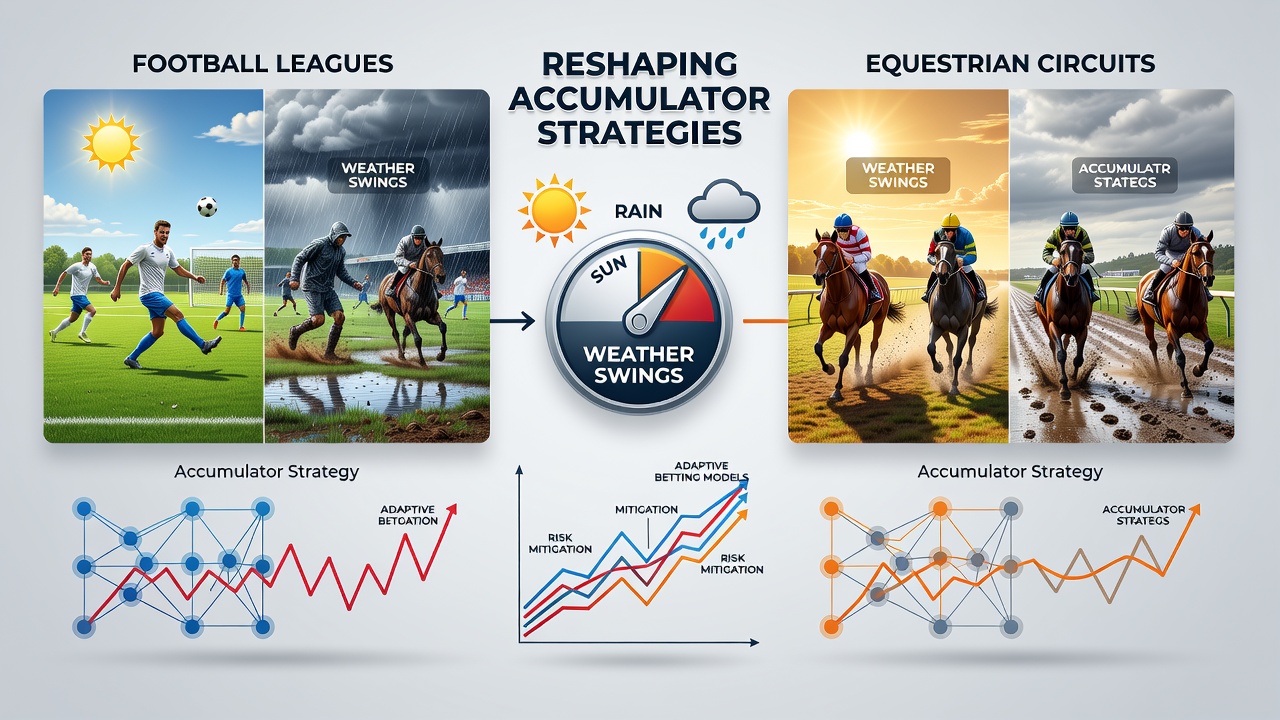
Accumulators that once relied on speed ratings alone now factor in weather-adjusted pace figures, and those who monitor multiple circuits simultaneously often split bets between turf and all-weather tracks when forecasts signal instability. Meetings scheduled in coastal regions experience additional variables from wind and salt exposure, which can influence stamina demands over longer distances and lead to revised accumulator weightings that emphasize proven stayers.
Integrated Approaches Across Both Sports
Operators who combine football and equestrian selections into single accumulators have introduced filters that flag events occurring under forecast alerts, allowing users to swap in alternatives when rain or heat warnings appear. Research from university sports analytics programs demonstrates that mixed-sport multis perform more consistently when weather variables receive equal attention to form and head-to-head records. Platforms now display real-time condition updates alongside betting options, and this transparency supports strategies that rotate selections based on updated ground or pitch reports rather than fixed lineups decided days in advance.
Regional differences remain pronounced, with leagues in temperate zones encountering more frequent swings than those in stable climates, and circuits located at higher altitudes face sharper temperature drops that affect both equine recovery and player endurance. Accumulator builders track these patterns through layered data sets that merge forecasts with performance metrics, resulting in selections that emphasize adaptability over raw talent projections.
Conclusion
Seasonal weather swings continue to reshape accumulator construction in both football leagues and equestrian circuits by introducing variables that reward preparation over intuition. As forecasting tools grow more granular and data feeds integrate directly with betting interfaces, those constructing multis gain clearer pathways to align selections with expected conditions across multiple venues and dates.